
The case study: The tale of two Anya Hindmarch
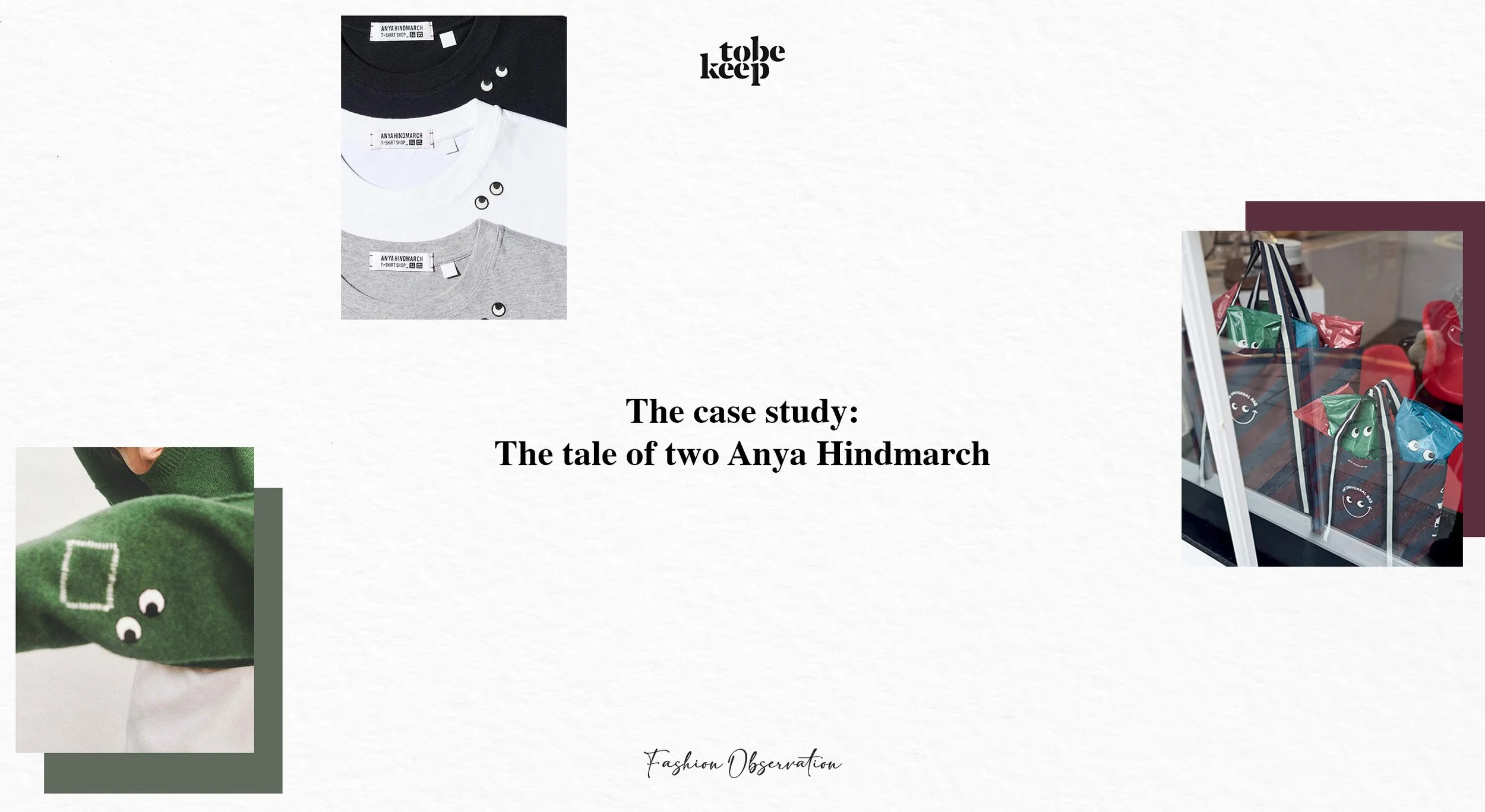
photo credit: Uniqlo
Why I Returned the Collab but Kept the Grocery Bag
Section: The Case Study
Date: 25 November 2025
Filed under: The Observation Room / Brand Audit
The Brief
This is an investigation into two different products from the same designer: Anya Hindmarch. One is a high-street collaboration (Uniqlo). The other is a utility item (The Universal Bag).
The Uniqlo Collab: Watching the price drop from £19.90 to £5.90 taught me that "Frequency dilutes Scarcity." I returned it not because I disliked the eyes, but because I had been trained to wait.
The Universal Bag: A £12 grocery bag became a "High-Frequency Touchpoint" that repaired my relationship with the brand. Key Takeaway: Real value lives in the items that survive the daily grind, not the ones that survive the hype cycle.
Part I: The Uniqlo Audit (Freshness Fatigue)
Subtitle: From "Gone in a Flash" to "Easy to Buy, Then Refunded"
The Event Log
Date: 22/05/2025 (Launch Day)
Action: I ordered at my kitchen counter. The site buffered. Adrenaline spiked. I secured the basket.
The Shift: Two months later, at the same counter, I emptied the basket.
The Math: £19.90 (Launch) → £9.90 (Week 8) → £5.90 (Week 11).
It wasn’t me that changed. It was the cadence of the collaboration that couldn't hold the full-price window.
-
The Timeline: Nov 2023 (Round 1) → Nov 2024 (Round 2) → May 2025 (Round 3).
The Error: Three rounds in quick succession with limited creative evolution (same Eyes motif, safe colours). When the supply becomes predictable, the "Panic Buy" instinct evaporates. The mindset slides from "I need this now" to "I can wait."
-
The Mechanism: Frequent, steep markdowns train the customer.
The Behaviour: In Round 1, I set an alarm. In Round 3, I watched the price drop. By Week 11, the T-shirt was £5.90. This creates "Discount Conditioning": loyalty shifts from the Brand to the Lowest Price.
The Result: I returned the lot. Not because the product was bad, but because the perceived value had collapsed. I felt foolish for paying full price, so I exited the transaction entirely.
Part II: The Universal Bag Audit (Everyday Utility)
How a Supermarket Bag Repaired the Relationship
The Event Log
Context: I saw an Instagram post about a Whole Foods × Anya Hindmarch drop (Tan colourway).
Action: I walked to my local branch. Found a bank of bags behind the tills. Bought one.
Immediate Test: I packed my groceries straight in. The wide, padded strap sat flat on my shoulder. The milk didn't sway.
Status: It instantly joined my everyday rotation.
-
The Mechanism: By placing the "Eyes" motif onto a utility object I use every day (grocery shopping), the brand shifted from "Occasional Luxury" to "Everyday Utility."
The Value: The bag is heavy, durable, and structurally sound. Every time I use it, I feel a micro-moment of satisfaction ("This strap doesn't dig in"). This rebuilds trust.
-
The Scenario: Later, I wanted the "Back to School" edition (Burgundy/Navy stripes).
The Friction: Online price £22 + Shipping £8. The shipping was nearly 40% of the item cost.
The Pivot: I refused to pay the shipping (bad value). I went to the physical pop-up (The Tuck Shop) instead.
The Outcome: The physical store experience (jars of sweets, curated display) added Narrative Value that justified the effort. I saved £8 and gained a memory.
The Comparative Analysis
Why did one fail and the other succeed?
|
Feature |
The Uniqlo Collab (Round 3) |
The Universal Bag |
|---|---|---|
|
Cadence |
Too Fast (Frequency > Freshness) |
Just Right (Limited Drops) |
|
Utility |
Low (Generic T-shirt cuts) |
High (Structural engineering) |
|
Price Trajectory |
Depreciating (£19 → £5) |
Stable (Fixed Price) |
|
Touchpoint |
Occasional Wear |
Daily Grind (Grocery) |
|
Verdict |
Returned |
Kept |
Takeaway
For the Brand:
Don't over-farm the field. If you release collabs too often without creative leaps, you train your customers to wait for the sale.
Utility builds trust. A sturdy £12 bag that works perfectly does more for brand loyalty than a £20 T-shirt that ends up in the bargain bin.
For You (The Buyer):
Check the Cadence: If a collab feels like "Just another one," wait 8 weeks. The price will likely drop.
Test the Utility: Real value isn't in the logo (the Eyes); it's in the strap width, the base reinforcement, and the fabric weight.
Buy the object that makes your daily grind easier, not the one that just looks cute on launch day.
Keep, let go, look elsewhere.
R.
tobekeep / Observation Room
